
期刊信息
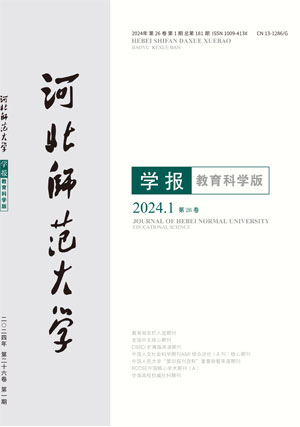
- 刊名: 河北师范大学学报(教育科学版)Journal of Hebei Normal University (Educational Science Edition)
- 主办: 河北师范大学
- ISSN: 1009-413X
- CN: 13-1286/G
- 教育部名栏入选期刊
- 全国中文核心期刊
- CSSCI扩展版来源期刊
- AMI综合评价(A刊)核心期刊
- RCCSE中国核心学术期刊
- 全国高校特色栏目社科学报
- 中国人民大学“复印报刊资料”重要转载来源期刊
- 全国高校权威社科期刊
人工智能融入教学:学理反思与实践重构
-
作者单位:(1.龙岩学院 师范教育学院,福建 龙岩 364012;2.西南大学 教育学部,重庆 400715) -
起止页码:125 - 132页 -
DOI:10.13763/j.cnki.jhebnu.ese.2026.06.014
Integrating Artificial Intelligence into Teaching: Theoretical Reflections and Practical Reconstruction
摘要/Abstract
人工智能深度介入教学,引发了技术“功能代偿”与教学“育人本质”之间的结构性张力。现有研究多从技术功能或伦理规范层面展开讨论,尚未触及教学根本属性层面的追问。由此,需要从教学的根本属性出发,辨析人工智能与人类教师在目的、感知、认知三个维度不可化约的差异,明确三者构成人工智能融入教学的界限,即计算逻辑与育人逻辑的对峙,算法感知与具身知觉的异质,以及相关性认知与因果性思维的分野。因此,应当构建“界限维持型共生”范式,未来教学实践应在维持界限的前提下重构分工、重塑伦理、重建教师主体性,使技术服务于而非消解教学的育人本质。
The deep integration of artificial intelligence (AI) into teaching has generated a structural tension between the functional compensation offered by technology and the fundamental educational purpose of teaching. Existing research has largely focused on technological capabilities or ethical norms, without sufficiently addressing questions concerning the fundamental nature of teaching itself. Accordingly, this study reexamines the integration of AI into teaching from the perspective of teaching’s essential attributes and identifies irreducible differences between AI and human teachers across three dimensions: purpose, perception, and cognition. These differences define the boundaries of AI integration into teaching and manifest themselves in three fundamental tensions: the conflict between computational logic and the logic of education for human development; the heterogeneity between algorithmic perception and embodied perception; and the distinction between correlation-based cognition and causal reasoning. In response, this study proposes a paradigm of “boundary-preserving symbiosis” between humans and technology. Future teaching practices should maintain these boundaries while reconstructing the division of responsibilities, reshaping ethical frameworks, and reestablishing teachers’ agency, ensuring that technology serves rather than undermines the fundamental educational purpose of teaching.
关键词
参考文献 24
- [ 1 ] 中共中央马克思恩格斯列宁斯大林著作编译局.马克思恩格斯全集(第十卷)[M].北京:人民出版社,1998.
- [ 2 ] [以]尤瓦尔·赫拉利.智人之上[M].林俊宏,译.北京:中信出版集团,2024.
- [ 3 ] Bajohr H.The Paradox of Anthroponormative Restriction:Artistic Artificial Intelligence and Literary Writing[J].Counter Text,2022(2):262-282.
- [ 4 ] [澳]尼格·尼维斯基.人工智能——智能系统指南[M].陈薇,等译.北京:机械工业出版社,2012.
- [ 5 ] [英]西蒙·温切斯特.知识的进化[M].孙亚南,译.北京:中国财政经济出版社,2024.
- [ 6 ] 中共中央马克思恩格斯列宁斯大林著作编译局.马克思恩格斯文集(第一卷)[M].北京:人民出版社,2009.
- [ 7 ] [法]让-弗朗索瓦·利奥塔.后现代状况:关于知识的报告 [M].车槿山,译.南京:南京大学出版社,2011.
- [ 8 ] 辛继湘,李瑞.人是技术的尺度——智能教学中人的主体性危机与化解[J].中国电化教育,2023(7):23-28+42.
- [ 9 ] 孙立会.人工智能之于教育决策的主体性信任危机及其规避[J].电化教育研究,2023(3):21-27+43.
- [ 10 ] 林德全.三主体师生关系引论[J].中国教育科学,2023(5):103-114.
- [ 11 ] 颜士刚,吴长帅.论教育领域人工智能机器人的主体性[J].中国电化教育,2024(6):17-22+69.
- [ 12 ] 张家军,王美潔.智能时代的教师身份认同:内涵、危机与应对[J].当代教育科学,2024(9):3-12.
- [ 13 ] 杨帆,陈昊璇,朱永新.人工智能助力教师专业发展:价值定位、现实制约与制度建设[J].中国远程教育,2024(4):58-68.
- [ 14 ] Sejnowski T J.Large Language Models and the Reverse Turing Test[J].Neural Computation,2023(3):309-342.
- [ 15 ] 赵晓伟,沈书生,祝智庭.生成式人工智能驱动的学习者认知跃迁——基于布卢姆认知目标的融智课堂实践路径[J].远程教育杂志,2025(6):13-21.
- [ 16 ] 袁培丽,宋萑.空心的神像:生成式人工智能教育应用的审思[J].清华大学教育研究,2025(4):19-27.
- [ 17 ] 刘三女牙,郝晓晗,李卿.论教育的可计算性[J].电化教育研究,2023(3):5-12.
- [ 18 ] Lawrie G.Establishing a Delicate Balance in the Relationship between Artificial Intelligence and Authentic Assessment in Student Learning[J].Chemistry Education Research and Practice,2023(2):392-393.
- [ 19 ] 黄刚,宗铁岩.人工智能应用于教育的价值审视与融合创新[J].现代教育管理,2025(2):42-53.
- [ 20 ] Adeleye O O,Eden C A,Adeniyi I S.Innovative Teaching Methodologies in the Era of Artificial Intelligence:A Review of Inclusive Educational Practices[J].World Journal of Advanced Engineering Technology and Sciences,2024(2):69-79.
- [ 21 ] [美]里德·霍夫曼,等.GPT时代人类再腾飞[M].芦义,译.杭州:浙江科学技术出版社,2023.
- [ 22 ] [德]莱布尼茨.莱布尼茨文集(第6卷) [M].段德智,译.北京:商务印书馆,2022.
- [ 23 ] [德]黑格尔.精神现象学(上卷)[M].贺麟,王玖兴,译.北京:商务印书馆,1979.
- [ 24 ] Schonberger V M,K.Cukier.Big Data:A Revolution that will Transform How we Live,Work,and Think[M].Boston:Harper Collins Publishers,2013.