
期刊信息
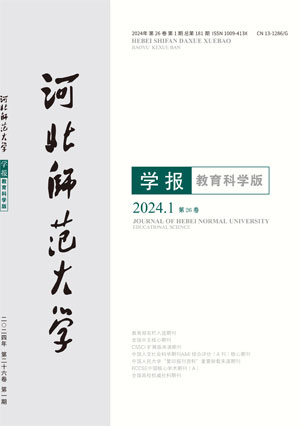
- 刊名: 河北师范大学学报(教育科学版)Journal of Hebei Normal University (Educational Science Edition)
- 主办: 河北师范大学
- ISSN: 1009-413X
- CN: 13-1286/G
- 教育部名栏入选期刊
- 全国中文核心期刊
- CSSCI扩展版来源期刊
- AMI综合评价(A刊)核心期刊
- RCCSE中国核心学术期刊
- 全国高校特色栏目社科学报
- 中国人民大学“复印报刊资料”重要转载来源期刊
- 全国高校权威社科期刊
人工智能时代下少子化对中国教育的影响
-
作者单位:(北京师范大学 教育学部,北京 100875) -
起止页码:19 - 29页 -
DOI:10.13763/j.cnki.jhebnu.ese.2025.04.003
The Impact of Declining Fertility on Chinese Education in the Artificial Intelligence Era
摘要/Abstract
在人工智能蓬勃发展的时代下,少子化趋势对中国教育的影响已经催生出新的变化。基于默顿的功能论可发现少子化对教育兼具正负向影响,且存在显性影响与隐性影响之分。少子化对教育的正向影响体现在:宏观上,显性影响促进教育资源的优化与整合,隐性 影响推动教育体制的调整与变革;中观上,从教学方面来看,显性影响协同人工智能优化教学过程,隐性影响转变学生合作模式,从科研层面来看,显性影响促进科研聚焦前沿,隐性影响拓展科研研究方向;微观上,显性影响调整家庭教育资源配置,隐性影响变革家长 教育理念。其负向影响包括:宏观上,显性影响导致教育资源闲置,隐性影响滋生教育改革惰性;中观上,从教学方面来看,显性影响抑制教师职业发展,隐性影响抑制学生人际交往能力,从科研方面来看,显性影响易造成科研资源分配失衡,隐性影响弱化科研成果创 新性;微观上,显性影响加剧教育内卷,隐性影响易造成培育方向失衡。针对以上问题,基于人工智能背景提出相应对策:宏观上,应做到教育资源配置合理性优化,教育财政结构适应性调整;中观上,应做到教师专业发展全面性提升,学生学业任务合理化减负,科研 资源分配适时性调整;微观上,应做到家庭教育理念创新性升华,教育资源获取多元性拓展,教育风险危机审慎性防范。总之,今后应进一步挖掘教育强国背景下少子化与人工智能融合的深层机制,从而为实现教育强国宏伟目标提供更为有效的理论支撑与实践指导。
In the era of burgeoning artificial intelligence, declining fertility rates in China are engendering novel transformations within the education sector. Through the lens of Robert K. Merton’s functional analysis, it becomes evident that these demographic shifts exert dualistic effects on education, encompassing both positive and negative dimensions, while manifesting through distinct explicit and latent pathways. Positively, at the macro-level, manifest effects optimize educational resource allocation while latent effects drive systemic reforms. At the meso-level, teaching manifests AI-enhanced instructional improvements with latent shifts in collaborative learning; research manifests heightened focus on cutting-edge domains with latent expansion of scholarly directions. At the micro-level, manifest effects adjust household educational investments with latent transformations in parental education philosophies. Negatively, macro-level impacts include resource underutilization (manifest) and reform inertia (latent). Meso-level teaching consequences involve constrained teacher development (manifest) and diminished student social skills (latent); research shows skewed resource distribution (manifest) and reduced innovation (latent). Micro-level impacts exacerbate educational involution (manifest) and misaligned developmental priorities (latent). Corresponding AI-informed strategies are proposed: macro-level resource rationalization and fiscal restructuring; meso-level enhanced teacher development, reduced student academic burdens, and dynamic research resource allocation; and micro-level innovative parenting approaches, diversified resource access, and prudent educational risk management. Future research should investigate synergistic mechanisms between demographic shifts and AI to advance China’s national education powerhouse initiative through precise theoretical and practical guidance.
关键词
参考文献 26
- [ 1 ] 习近平:切实做好第七次全国人口普查工作 为高质量发展提供准确统计信息支持[EB/OL].(2020-11-02)[2025-01-20].https://www.gov.cn/xinwen/2020-11/02/content_5556792.htm.
- [ 2 ] 蔡昉.如何开启第二次人口红利?[J].国际经济评论,2020(2):9-24+4.
- [ 3 ] 中国统计年鉴2024[EB/OL].(2024-11-19)[2025-01-20].https://www.stats.gov.cn/sj/ndsj/2024/indexch.htm.
- [ 4 ] 中共中央、国务院印发《教育强国建设规划纲要(2024-2035年)》[N].人民日报,2025-01-20.
- [ 5 ] 刘幸,姜星海,钟秉林.日本战后人口变迁与教育变革的关系研究[J].教育科学研究,2021(12):68-73.
- [ 6 ] 姜星海,张志国,钟秉林.日本城市化与农村初级中等教育的历史考察及现实启示[J].河北师范大学学报(教育科学版),2021,23(6):68-74.
- [ 7 ] 刘奉越.城乡关系下农村“空心化”的演进历程及发展走向[J].河北大学学报(哲学社会科学版),2023(6):11-19.
- [ 8 ] 陈武元,陈祎,蔡庆丰.社会少子化、刘易斯拐点与家庭教育投资——基于资源再配置的研究视角[J].教育研究,2024,45(10):121-136.
- [ 9 ] 洪秀敏,邵婷婷.教育强国背景下学前教育“人”“财”供需变化与适配挑战——基于未来十年适龄人口发展趋势的预测[J].河北师范大学学报(教育科学版),2025,27(2):127-140.
- [ 10 ] [美]罗伯特·金·默顿著.论理论社会学[M].何凡兴,李卫红,王丽娟,译.北京:华夏出版社,1990.
- [ 11 ] 刘少杰.国外社会学理论[M].北京:高等教育出版社,2006.
- [ 12 ] 石人炳.我国人口变动对教育发展的影响及对策[J].人口研究,2003(1):55-60.
- [ 13 ] 国务院办公厅关于规范农村义务教育学校布局调整的意见[EB/OL].(2012-09-06)[2025-01-20].http://www.moe.gov.cn/jyb_xwfb/xw_zt/moe_357/jyzt_2017nztzl/ztzl_xyncs/ztzl_xy_zcfg/201701/t20170117_295040.html.
- [ 14 ] 关于进一步规范农村义务教育学校布局调整的意见[EB/OL].(2016-05-26)[2025-01-20].https://www.hunan.gov.cn/hnszf/xxgk/wjk/szbm/szfzcbm_19689/sjyt_19696/gfxwj_19697/201609/t20160913_4888367.html.
- [ 15 ] 锁箭,范一迪,李先军.少子老龄化背景下劳动力供给政策优化的国际经验及启示[J].改革,2022(11):130-143.
- [ 16 ] 钟秉林,方芳.高等教育普及化阶段精英教育的逻辑基础与实践路径[J].中国远程教育,2023,43(1):21-29.
- [ 17 ] Apps P,Rees R.Household Production,Full Consumption and the Costs of Children[J].Labour Economics,2002(8):621-648.
- [ 18 ] 颜淑霞,俞玲萍,周国明,等.生源变化与上海市基础教育的可持续发展[J].上海教育科研,2004(7):9-13.
- [ 19 ] 胡咏梅,元静.2021—2035年学龄人口变动对我国基础教育事业发展的挑战及应对策略[J].人民教育,2023(5):41-45.
- [ 20 ] 乔锦忠,沈敬轩,李汉东,等.2020-2035年中国人口大省义务教育阶段资源配置研究——以四川省为例[J].教育经济评论,2020,5(5):24-52.
- [ 21 ] 范先佐.教育经济学[M].北京:人民教育出版社,1999.
- [ 22 ] 张宏亮.百万扩招背景下高职生源结构变动与职业教育调适策略[J].中国职业技术教育,2020(7):54-60.
- [ 23 ] 教育部:我国已建成世界规模最大高等教育体系[EB/OL].(2020-12-03)[2025-01-20].http://www.moe.gov.cn/fbh/live/2020/52717/mtbd/202012/t20201203_503281.html.
- [ 24 ] 袁玉龙,马艳阳,庞茗月.人工智能时代教育评价主体性让渡的风险规避[J].现代教育技术,2023,33(5):34-40.
- [ 25 ] 任海涛,孔仲渊.教师评价权的智能革命:人工智能何以挑战教师评价权[J].苏州大学学报(教育科学版),2024,12(3):21-30.
- [ 26 ] 陈友华,苗国.升学锦标赛、教育内卷化与学区分层[J].江苏行政学院学报,2021(3):55-63.